
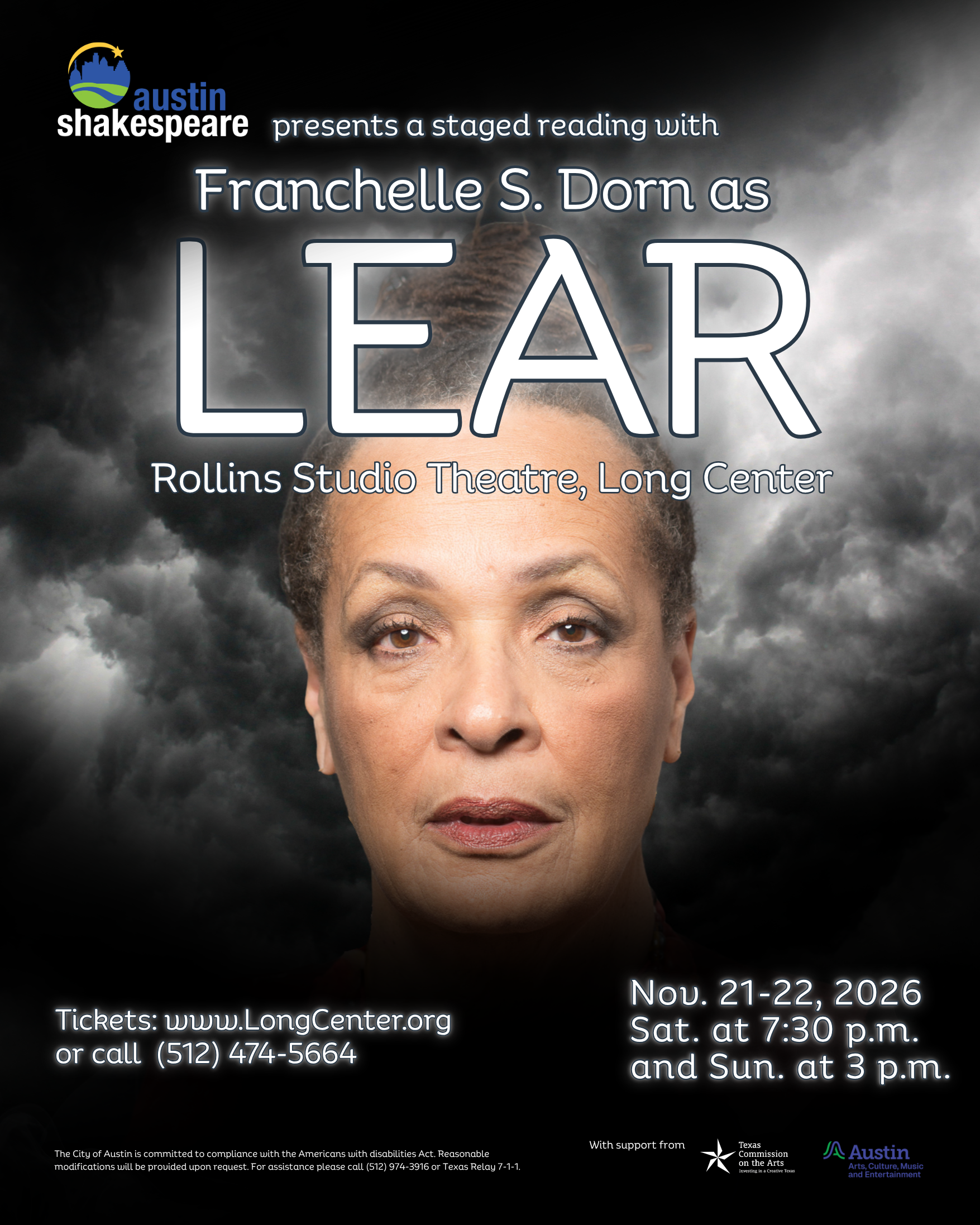
LEAR
Directed by Ann CiccolellA
Come as you are. Bring your curiosity. Shakespeare's stories belong to everyone. Enjoy the performance.
This audience companion is an experiment in making classic theater more welcoming. It is meant to support the actors and the original play, not replace the pleasure of discovering the story for oneself in person.
This guide summarizes Shakespeare's original play. The production will adapt or shorten scenes for its staged-reading format which does not use scenery or props but provokes the audience’s imagination. Even though actors are reading from scripts, audiences consistently remark on how quickly they are engaged viewing this presentation format.
THE STORY IN ONE MINUTE
What is Lear about?
Lear is ready to step away from ruling the kingdom. Before dividing power and land among three daughters, Lear asks each one to express her love. While two daughters offer generous declarations. The youngest, Cordelia, says she will not speak about her love more than saying that she loves her mother as a daughter should. Lear reacts with tremendous anger, making a decision that sets the entire family and the kingdom on a dangerous course.
One can follow the drama without knowing every word: watch how people treat one another when power begins to change hands.
Key themes: Family Power Truth Loyalty Trust
MEET THE CHARACTERS
Please note that some actors play multiple roles in this production.

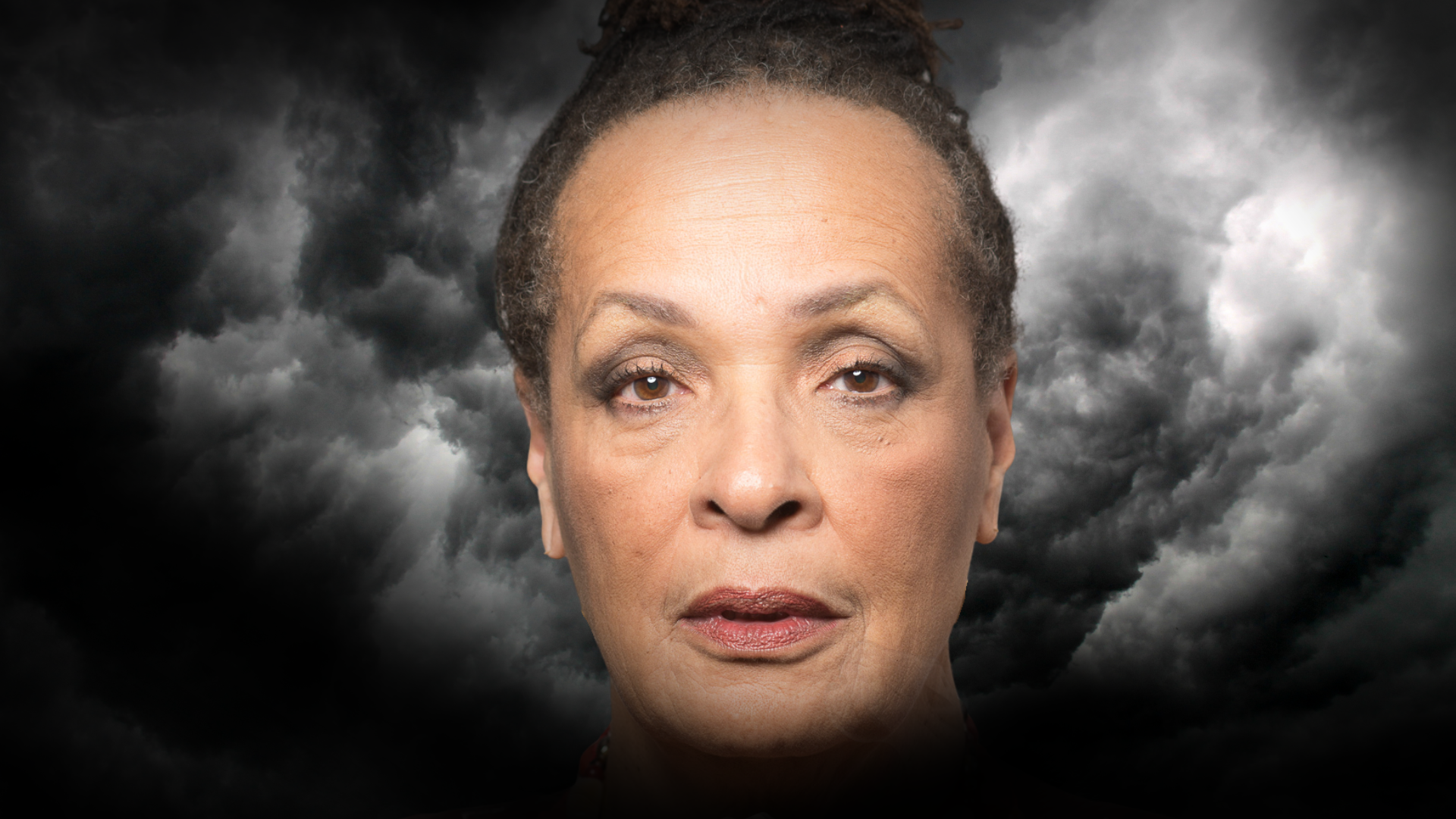
Lear (Franchelle S. Dorn)
A powerful ruler nearing the end of her reign. Lear wants love and respect from her three daughters, but struggles when the youngest refuses to play along with her proposed schemes.

Goneril (Amani Dorn)
Goneril, the eldest daughter, is determined to protect and expand her own authority in the realm. Her relationship with Lear grows increasingly strained.

Regan (Mary Dorn)
Regan, the middle daughter, joins her elder sister in praising Lear, even trying to outpace her older sibling’s efforts. As family tensions deepen, she faces choices about loyalty, authority, and how to treat her mother, the King.

Cordelia (Helen Merino)
In the first scene, the youngest daughter, Cordelia, refuses to “speak more than simply” – meaning to communicate with depth, subtext, or expanded detail rather than using basic, flat, or single-word answers to her King. Her choice provokes Lear’s anger increasing the familial tension.

Gloucester (Raymond T. Schultz)
Gloucester, has two sons, Edgar and Edmund. Like Lear, he must decide whom to trust between them. This nobleman’s familial conflict becomes a second story about deception and misplaced confidence.

Edgar (Peter Shine)
Edgar is Gloucester's eldest, legitimate son. The sibling rivalry between Edgar & Edmund reveals how family expectations can become powerful, manipulative, and dangerous.

Edmund (Gwendolyn Kelso Mckelvey)
Edmund is the younger son, born outside marriage. The sibling rivalry between Edgar & Edmund reveals how family expectations can become powerful, manipulative, and dangerous.

The Fool (Marc Pouhé)
The Fool is seen as Lear’s constant companion. He uses humor, songs, and riddles to tell Lear the hard truths he must learn. As is typical in Shakespeare’s works, the character who sounds the silliest may likely be among the wisest characters on the stage.

Kent (Samuel Grimes)
Kent in one of the king’s most loyal noble servants in the realm. His candor in speaking with the king, though valued, proves risky to his own survival. His loyal determination to serve his king offers additional perspective on what genuine loyalty truly looks like.

Oswald, Doctor, and a Knight (Ev Lunning)

King of France, a Captain, a Herald , gentleman Patrick Schmidt, Duke of Cornwall, a gentleman, an old man (Meredith O’Brien)

Duke of Albany, a Captain, Curan, an Officer (Kirk Barbera)
WATCH WITH CURIOSITY
Three things to watch for:
01 / LOVE
Words or actions?
Who makes the biggest declarations of love?
Who demonstrates loyalty when it becomes difficult?
02 / POWER
Who is in charge?
Notice how people's behavior changes when Lear begins giving up her authority.
03 / TRUTH
Who can Lear trust?
Some characters say exactly what others want to hear; others risk everything to speak honestly.
A FINAL THOUGHT
There will be a brief talk-back session after each performance. All are welcome to stay and participate each night. We here at Austin Shakespeare look forward to welcoming you to our home and sharing this powerful story with you.